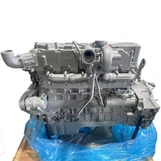
As a supplier of Perkins diesel engines, I understand the importance of proper maintenance to ensure the longevity and optimal performance of these powerful machines. One crucial maintenance task is changing the fuel filter, which plays a vital role in keeping the engine running smoothly by preventing contaminants from reaching the fuel injectors. In this blog post, I'll guide you through the process of changing the fuel filter of a Perkins diesel engine, step by step.


Why Change the Fuel Filter?
Before we dive into the process, let's understand why changing the fuel filter is so important. Over time, the fuel filter accumulates dirt, debris, and water from the diesel fuel. If these contaminants are not removed, they can clog the fuel injectors, reduce engine power, and even cause permanent damage to the engine. Regularly changing the fuel filter helps maintain the engine's efficiency, improves fuel economy, and extends the life of the engine.
Tools and Materials You'll Need
- New fuel filter (make sure it's compatible with your Perkins diesel engine)
- Wrench or socket set
- Drain pan
- Rags or paper towels
- Safety glasses
- Gloves
Step 1: Prepare the Engine
- Turn off the engine: Before you start working on the fuel filter, make sure the engine is turned off and has cooled down. This will prevent any accidental injuries from hot engine parts.
- Relieve the fuel pressure: To relieve the fuel pressure, locate the fuel pump and loosen the bleed screw. You may need to use a wrench or socket set to do this. Once the bleed screw is loosened, you should hear a hissing sound as the fuel pressure is released. Tighten the bleed screw once the hissing stops.
Step 2: Locate the Fuel Filter
The fuel filter is usually located near the fuel tank or on the engine block. Refer to your engine's manual to find the exact location of the fuel filter. On some Perkins diesel engines, the fuel filter may be housed in a filter housing, while on others, it may be a standalone filter.
Step 3: Drain the Fuel
- Place a drain pan under the fuel filter: To catch any fuel that may spill during the filter change, place a drain pan under the fuel filter.
- Loosen the fuel lines: Use a wrench or socket set to loosen the fuel lines connected to the fuel filter. Be careful not to damage the fuel lines or the fittings.
- Drain the fuel: Once the fuel lines are loosened, allow the fuel to drain into the drain pan. This may take a few minutes, depending on the amount of fuel in the filter.
Step 4: Remove the Old Fuel Filter
- Remove the filter housing (if applicable): If your fuel filter is housed in a filter housing, use a wrench or socket set to remove the housing. Be careful not to damage the housing or the O-rings.
- Remove the old fuel filter: Once the filter housing is removed, you can simply pull out the old fuel filter. Be careful not to spill any remaining fuel or contaminants.
Step 5: Install the New Fuel Filter
- Lubricate the O-rings: Before installing the new fuel filter, lubricate the O-rings with a small amount of clean diesel fuel. This will help ensure a proper seal and prevent leaks.
- Insert the new fuel filter: Carefully insert the new fuel filter into the filter housing or the engine block. Make sure the filter is properly seated and aligned.
- Reinstall the filter housing (if applicable): If you removed the filter housing, reinstall it using a wrench or socket set. Tighten the housing securely, but be careful not to over-tighten it.
Step 6: Reconnect the Fuel Lines
- Reconnect the fuel lines: Use a wrench or socket set to reconnect the fuel lines to the new fuel filter. Make sure the connections are tight and secure.
- Check for leaks: Once the fuel lines are reconnected, turn on the engine and check for any leaks. If you notice any leaks, tighten the connections or replace the O-rings as needed.
Step 7: Bleed the Fuel System
- Locate the bleed screw: The bleed screw is usually located on the fuel pump or the fuel filter housing. Refer to your engine's manual to find the exact location of the bleed screw.
- Loosen the bleed screw: Use a wrench or socket set to loosen the bleed screw. You should see air bubbles coming out of the screw.
- Prime the fuel system: To prime the fuel system, you may need to use a hand primer pump or a fuel priming tool. Follow the instructions in your engine's manual to prime the fuel system.
- Tighten the bleed screw: Once the air bubbles stop coming out of the bleed screw, tighten the screw.
Step 8: Check the Fuel Level
- Check the fuel level: After changing the fuel filter, check the fuel level in the fuel tank. If necessary, add more fuel to the tank.
- Start the engine: Once the fuel level is checked, start the engine and let it run for a few minutes. Check for any abnormal noises or vibrations. If everything seems normal, you're done!
Conclusion
Changing the fuel filter of a Perkins diesel engine is a relatively simple maintenance task that can be done by anyone with basic mechanical skills. By following the steps outlined in this blog post, you can ensure that your engine is running smoothly and efficiently. Remember to always refer to your engine's manual for specific instructions and safety precautions.
If you have any questions or need further assistance with changing the fuel filter of your Perkins diesel engine, please don't hesitate to contact us. We're a leading supplier of Perkins diesel engines, including the 1104D-44TA Agricultural Machinery Engine, PERKINS 1104D-44TA Diesel Engine, and PERKINS 1104D-44TA Agricultural Machinery Engine. Our team of experts is here to help you find the right engine and parts for your needs. Contact us today to start a procurement negotiation and keep your equipment running at its best.
References
- Perkins Diesel Engine Operator's Manual
- Automotive Maintenance and Light Repair textbook