

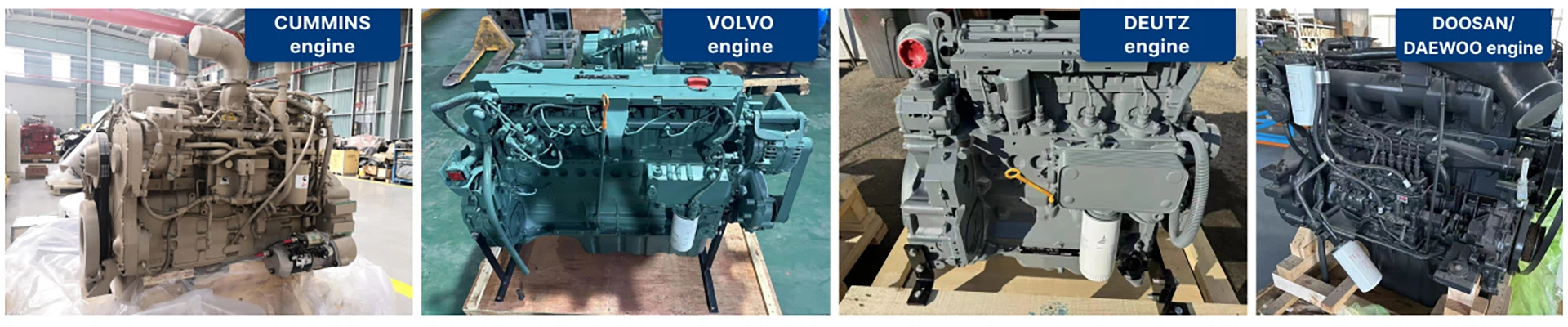
In the power equipment sector, the Cummins 4BT engine is widely used in numerous industries due to its compact design, excellent reliability, and adaptability. The horsepower (HP) it can handle requires careful consideration of various factors.
Typically, the power range of a standard Cummins 4BT engine is between 40 and 100 kilowatts (kW), which translates to a horsepower range of approximately 54 to 134 HP.


Key Factors Affecting Horsepower Capability
Engine Structure and Materials
The 4BT engine features an inline four-cylinder design with a 102 mm bore, a 120 mm stroke, and a displacement of 3.9 liters. The cylinder block and cylinder head are constructed of high-strength cast iron, offering excellent pressure and heat resistance. This structural design and material selection ensure stable power output within a certain range. However, exceeding the standard horsepower rating places increased mechanical stress and thermal loads on internal engine components such as the pistons, connecting rods, and crankshaft.
Intake and Fuel System
The intake system plays a key role in increasing engine horsepower. Conventional 4BT engines often utilize turbocharging. A supercharger increases intake air volume, allowing more air to enter the cylinders for combustion, thereby boosting power. However, when pursuing higher horsepower, a conventional supercharger may not be able to meet the significantly increased intake air demand.
The fuel system is equally important
A common 4BT engine fuel system is the PT fuel system, which precisely controls the fuel injection quantity and timing to ensure efficient combustion. To increase horsepower, precise adjustment of the fuel injection quantity is required to ensure a thorough mixing of fuel and air for combustion.
In practice, the horsepower output of a conventional 4BT engine under standard operating conditions is typically 54 to 134 HP. While it is possible to achieve 200 HP or even higher through complex and costly modifications, this involves a difficult balance between reliability, durability, and cost. When considering increasing engine horsepower, users should carefully consider various factors, including their specific needs, budget, and expectations for equipment reliability.


