

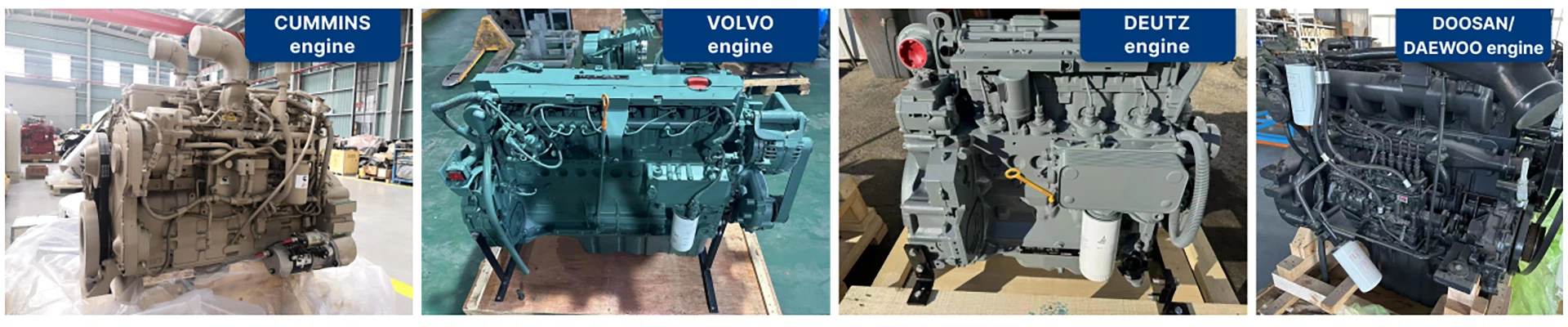
The working principle of a diesel engine is: through a cycle consisting of four strokes, namely intake, compression, work (combustion and expansion), and exhaust, the self-ignition characteristics of diesel are used to realize fuel combustion in high-pressure air and drive the piston movement, ultimately converting thermal energy into mechanical energy.
The following is the detailed process:
Intake stroke
The piston moves downward, the intake valve opens, and air enters the cylinder through the air filter. At this time, diesel is not injected, only pure air is inhaled.
Compression stroke
The piston moves upward, the intake and exhaust valves close, and the air is compressed to a high temperature and high pressure state (the compression ratio can reach more than 14:1, far exceeding the 9:1 of gasoline engines). At this time, the temperature can reach more than 500 degrees Celsius, creating conditions for diesel self-ignition.
Power stroke
When the piston approaches the top dead center, the injector will spray the atomized diesel directly into the cylinder at high pressure (usually more than 200 bar). After the diesel is mixed with the high-temperature air, it will self-ignite and expand, pushing the piston downward, and converting the linear motion into the rotational motion of the crankshaft through the crank-connecting rod mechanism.
Exhaust stroke
The piston moves upward again, the exhaust valve opens, and the exhaust gas after combustion is discharged from the cylinder to prepare for the next cycle.
Core Difference: Unlike gasoline engines, diesel engines use compression ignition, no spark plugs, and rely on the high temperature of compressed air to achieve spontaneous combustion of fuel. This feature gives it the advantage of low speed and high torque, and is often used in heavy-load scenarios such as trucks and ships.


