

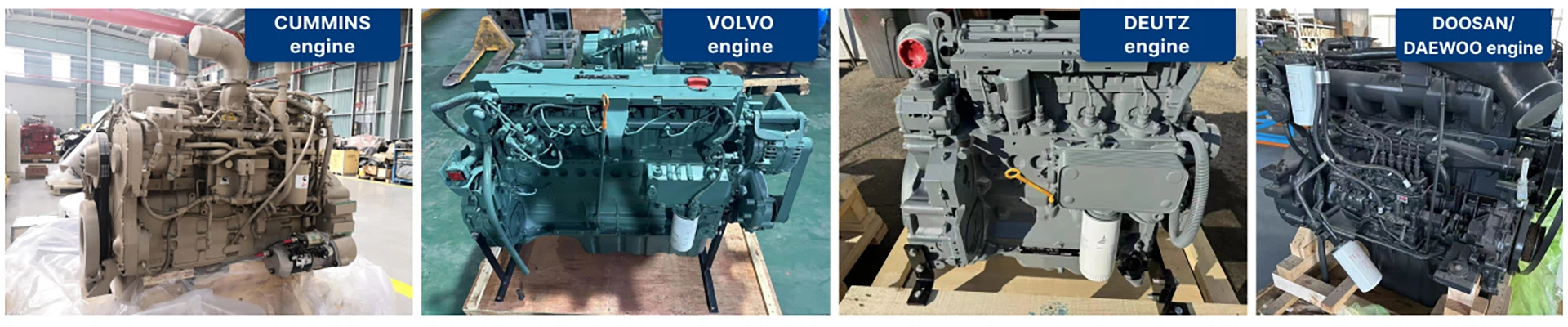
In the 180–220HP power range, the Cummins 6CTA8.3-M205 has long been considered the "golden power" for shallow water vessels. Whether it's seafood fishing boats, transport boats, barges, or small coastal cargo ships, this engine can find a suitable application scenario.
Why can a straight-six diesel engine with a displacement of less than 9 liters handle such a diverse range of vessel types? The key lies in its extremely flexible matching of torque, power, load capacity, and power curves for both shallow water and coastal transportation scenarios.
I. Shallow-Sea Operation Vessels: Emphasizing Low-Speed Torque and Continuous Load Capacity
For shallow-sea fishing and operation vessels (such as trawlers, purse seiners, aquaculture vessels, and underwater mooring vessels), the most important power characteristics are not initial speed, but rather:
High torque at low speeds (to handle heavy loads, net hauling, and drag)
Reliable continuous operation at medium to low speeds
Stability to handle frequent starts and stops and reverse currents
The 6CTA8.3-M205 engine perfectly meets these requirements:
1) Maximum torque is delivered in a lower RPM range (typically 1300–1500 RPM)
This allows fishing vessels to maintain linear power when trawls heavy loads or hauling against currents, avoiding a feeling of being "powerless."
2) Supercharged + intercooled design for strong stability
Even with unstable fuel conditions, it can maintain stable power output, making it suitable for operations in remote port areas.
3) High-load continuous operating capability
Shallow water operations typically involve continuous operation for 10–20 hours. This engine features:
Good combustion efficiency
Lower heat fade than comparable engines
Stable fuel consumption, preventing overheating under high loads
Therefore, in shallow water operations, the 6CTA8.3-M205's power strategy is:
Maintain 60–80% operating load → Maximize torque → Optimal fuel consumption.
II. Coastal Transport Vessels: Emphasizing Economical Speed and Durable Cruising Capability
Coastal transport vessels (such as small cargo ships, sand and gravel carriers, and supply ships) typically have longer voyages, requiring engines that:
have lower fuel consumption at medium to high speeds
maintain stable output within the 2000–2200 RPM range over extended periods
possess good load response capabilities (acceleration, gear shifting, berthing)
The 6CTA8.3-M205's power curve is significantly optimized in the medium-speed range, making it an ideal power source for coastal transport:
1) Maintains stable power output in the 1800–2100 RPM range
Suitable for cruising speeds of 10–14 knots.
2) More economical fuel supply calibration
Compared to some high-revving engines in the same class,
the 6CTA8.3-M205 offers a 6–10% fuel efficiency advantage in the coastal cruising range.
3) Fast Load Response
When encountering:
Increased waves
Acceleration upon entering port
Turning and turning
Sudden changes in sea state
The engine does not experience power lag, significantly improving safety and maneuverability.
Therefore, the power strategy for coastal transport vessels is:
Maintain approximately 70% load while cruising → Optimal balance between fuel consumption and durability.
✔ One engine is compatible with both shallow-water operations and coastal transport
✔ Low-speed, high-torque performance suitable for heavy-load fishing operations
✔ Medium-to-high speed, high efficiency suitable for coastal cruising
✔ Reliable mechanical structure, suitable for remote sea areas
✔ Low maintenance costs and low risk of downtime
✔ Significantly superior fuel economy compared to other engines in its class
This makes the 6CTA8.3-M205 the "default choice" for many ship owners, shipyards, and conversion companies.


