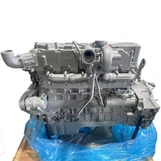
The intake manifold plays a crucial role in the operation of a diesel engine. As a diesel engine supplier, I have witnessed firsthand how the design and functionality of the intake manifold can significantly impact engine performance, efficiency, and emissions. In this blog post, I will delve into the various functions of the intake manifold in a diesel engine and discuss its importance in the overall engine system.
Air Distribution
One of the primary functions of the intake manifold is to distribute the incoming air evenly to each cylinder of the diesel engine. This is essential for ensuring that each cylinder receives the correct amount of air for combustion. Uneven air distribution can lead to poor combustion, reduced power output, increased fuel consumption, and higher emissions.
The intake manifold achieves this by using a series of passages or runners that direct the air from the air filter and throttle body to each cylinder. The length, diameter, and shape of these runners are carefully designed to optimize the airflow and ensure uniform distribution. For example, in some high-performance diesel engines, the intake manifold may feature tuned runners that are designed to resonate at specific engine speeds, enhancing the airflow and improving engine performance.
Air-Fuel Mixing
In a diesel engine, the intake manifold also plays a role in the air-fuel mixing process. Unlike gasoline engines, which use a carburetor or fuel injector to mix the air and fuel before it enters the cylinders, diesel engines inject the fuel directly into the cylinders at high pressure. However, the intake manifold still helps to ensure that the air is properly mixed with the injected fuel for efficient combustion.
The intake manifold can be designed to create a swirling or tumbling motion in the incoming air, which helps to break up the fuel droplets and improve the mixing process. This is known as "charge motion" and can significantly enhance the combustion efficiency and power output of the engine. Additionally, some modern diesel engines may use variable intake manifolds that can adjust the airflow and charge motion based on the engine speed and load, further optimizing the air-fuel mixing process.
Pressure Regulation
Another important function of the intake manifold is to regulate the pressure of the incoming air. The intake manifold acts as a buffer between the air filter and the cylinders, helping to smooth out the airflow and maintain a consistent pressure. This is particularly important in turbocharged or supercharged diesel engines, where the intake air is compressed to increase the engine's power output.
The intake manifold may include a plenum chamber, which is a large volume of air that helps to dampen the pressure fluctuations and ensure a steady supply of air to the cylinders. Additionally, the intake manifold may be equipped with a throttle body or a wastegate, which can be used to control the amount of air entering the engine and regulate the boost pressure in turbocharged engines.
Emissions Control
The intake manifold also plays a role in emissions control in a diesel engine. By ensuring proper air distribution and mixing, the intake manifold helps to improve the combustion efficiency and reduce the formation of harmful emissions such as particulate matter (PM), nitrogen oxides (NOx), and carbon monoxide (CO).
In addition, some modern diesel engines may use exhaust gas recirculation (EGR) systems, which recirculate a portion of the exhaust gases back into the intake manifold. The intake manifold helps to mix the recirculated exhaust gases with the incoming air, reducing the oxygen concentration in the cylinders and lowering the combustion temperature. This helps to reduce the formation of NOx emissions.
Impact on Engine Performance
The design and functionality of the intake manifold can have a significant impact on the overall performance of a diesel engine. A well-designed intake manifold can improve the engine's power output, torque, fuel efficiency, and emissions performance. On the other hand, a poorly designed or damaged intake manifold can lead to reduced performance, increased fuel consumption, and higher emissions.


For example, a clogged or restricted intake manifold can reduce the airflow to the cylinders, resulting in poor combustion and reduced power output. Similarly, a leak in the intake manifold can allow unmetered air to enter the engine, causing the air-fuel mixture to become too lean and leading to rough idling, misfires, and reduced performance.
Examples of Diesel Engines with Advanced Intake Manifolds
As a diesel engine supplier, we offer a wide range of engines with advanced intake manifold designs. For example, the Deutz TCD2012L042V 4 Cylinder Diesel Engine features a high-performance intake manifold that is designed to optimize the airflow and ensure uniform distribution to each cylinder. This engine is known for its excellent power output, fuel efficiency, and reliability.
Another example is the Weichai WP12.460E50 6-Cylinder Diesel Engine For Trucks, which is equipped with a variable intake manifold that can adjust the airflow and charge motion based on the engine speed and load. This engine offers superior performance and fuel efficiency, making it an ideal choice for heavy-duty truck applications.
We also offer the Deutz TCD2012L042V 4 Cylinder Diesel Motor, which features an advanced intake manifold design that helps to improve the air-fuel mixing and combustion efficiency. This engine is suitable for a variety of applications, including construction equipment, agricultural machinery, and industrial generators.
Conclusion
In conclusion, the intake manifold is a critical component of a diesel engine, playing a vital role in air distribution, air-fuel mixing, pressure regulation, emissions control, and engine performance. As a diesel engine supplier, we understand the importance of a well-designed intake manifold and offer a range of engines with advanced intake manifold designs to meet the needs of our customers.
If you are in the market for a diesel engine and would like to learn more about our products or discuss your specific requirements, please feel free to contact us. Our team of experts is ready to assist you in selecting the right engine for your application and providing you with the support and service you need.
References
- Heywood, J. B. (1988). Internal Combustion Engine Fundamentals. McGraw-Hill.
- Stone, R. (1999). Introduction to Internal Combustion Engines. Society of Automotive Engineers.
- Taylor, C. F. (1985). The Internal Combustion Engine in Theory and Practice. MIT Press.