

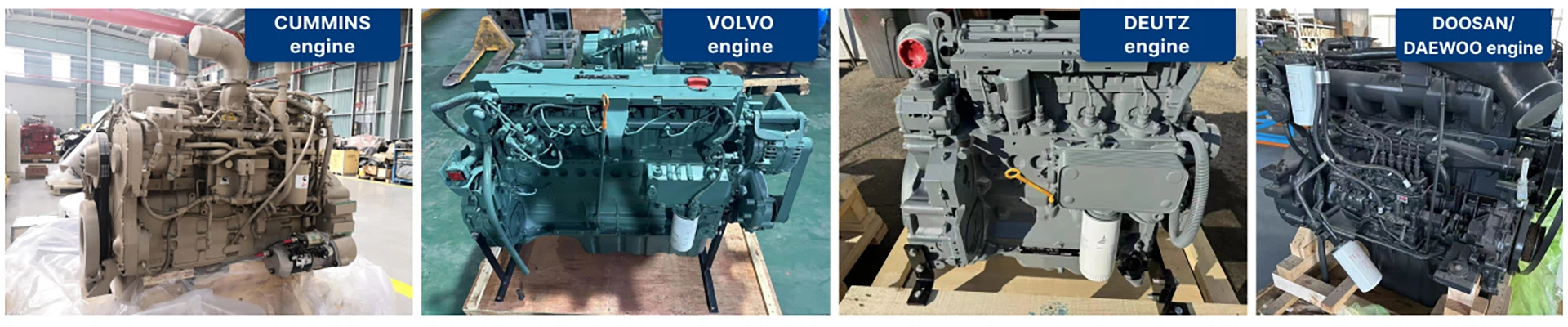
The 6CTAA8.3-M260 is a classic marine diesel engine developed by Dongfeng Cummins (DCEC) based on Cummins' global technology system. Belonging to the 8.3L displacement class of medium-power engines, it holds an important position in various niche scenarios such as inland waterway shipping and coastal operations due to its stable power output, excellent operating condition performance, and convenient maintenance.
I. Understanding Core Parameters: The Basic Logic of Suitable Applications
The engine's core parameters directly determine the tonnage, navigation area, and operational intensity of the vessels it is suitable for. The precise positioning of the 6CTAA8.3-M260's parameter characteristics makes it a "golden power" for short- and medium-distance shipping scenarios. Its key technical parameters are as follows:
|
Parameter Categories |
Specific Specifications | Industry Compatibility Significance |
|
Power Specifications |
Rated Power: 190kW (260HP), Maximum Torque: 1125N.m@1400rpm | Matches the power needs of 300-800 ton vessels; low-speed, high-torque characteristics suitable for heavy-load starts and continuous navigation. |
|
Structural Configuration |
6-cylinder inline, 4-stroke, turbocharged, intercooled (air-to-air cooling), mechanically controlled | Integrated cylinder design reduces the number of parts by 25% compared to similar products, resulting in a lower failure rate and suitability for compact vessel engine rooms. |
|
Basic Attributes |
Displacement: 8.3L, Bore x Stroke: 114mm x 135mm, Net Weight: 674kg (with flywheel and generator) | Balanced power density and moderate weight prevent excessive increase in vessel draft, making it suitable for small and medium-sized vessel designs. |
| Environmental Protection and Reliability | Meets Euro emission standards, equipped with a wet turbocharger and honed cylinder liners. |
Meets environmental requirements for inland waterway and near-shore wind-prone navigation areas; resistant to seawater corrosion and exhibits low oil consumption, suitable for long-term continuous operation. |
II. Core Adaptation Scenarios: Precise Matching Based on Vessel Purpose
Based on the above parameter characteristics, the 6CTAA8.3-M260's adaptation scenarios focus on "medium tonnage, medium-short distance, medium intensity" operational needs, covering multiple fields such as freight, fisheries, passenger transport, and special auxiliary services. Specific scenarios and typical vessel types are as follows:
Scenario 1: Inland/Coastal Short-Distance Freight Vessels
This is the most core adaptation scenario for this engine model. The core requirements for engines in inland and coastal short-distance freight (typically within 500 kilometers) are "stable power + fuel economy + convenient maintenance," and the parameter characteristics of the 6CTAA8.3-M260 perfectly match these requirements.
Typical vessel types: 300-800 ton inland dry cargo barges, 500-1000 ton coastal bulk carriers, and small container barges. The 6CTAA8.3-M260 engine boasts a fuel consumption rate of only 18L/hour at 50% load, significantly reducing fuel costs for short-haul freight. Its mechanical speed control system also offers strong anti-interference capabilities, making it suitable for navigation in complex waters.
Scenario 2: Small and Medium-Sized Fishing Vessels
The core requirements for engines on fishing vessels are "high low-speed torque + resistance to continuous operation + corrosion resistance." The 6CTAA8.3-M260's turbocharged intercooled design and corrosion-resistant structure make it the mainstream choice for this scenario.
Typical Vessel Types: 20-50 meter class near-shore trawlers, purse seine vessels, and estuary gillnet vessels. These vessels require prolonged low-speed towing of nets, placing extremely high demands on the engine's continuous torque output. The 6CTAA8.3-M260 delivers a peak torque of 1125 N·m at 1400 rpm, providing ample towing power. Furthermore, its wet turbocharger and wet exhaust manifold effectively reduce engine room temperature, adapting to the high-temperature environment of prolonged fishing operations.
Scenario 3: Inland Waterway Passenger and Recreational Shipping Vessels
The core requirements for engines in inland waterway passenger transport (short-distance ferries, scenic cruise ships) and recreational shipping (small and medium-sized yachts, motorboats) are "smooth operation + low noise + compact size." The integrated design and low vibration characteristics of the 6CTAA8.3-M260 engine precisely match these requirements.
Typical vessel types: 30-80 seat inland waterway short-distance ferries, 10-20 meter sightseeing boats, and small and medium-sized luxury yachts. The engine room space of these vessels is usually quite compact. The overall dimensions of the 6CTAA8.3-M260 are only 1360mm × 780mm × 988mm, making it small and easy to arrange in the engine room.
Scenario 4: Special Operation Auxiliary Vessels
In small and medium-sized special operation vessels, the 6CTAA8.3-M260 mainly serves as the main propulsion power, suitable for auxiliary operation scenarios with "moderate workload + high maneuverability requirements." The core requirements are "fast power response + high reliability."
Typical vessel types: small and medium-sized tugboats, port operation barges, water quality monitoring vessels, and small salvage auxiliary vessels. These vessels require frequent starts, stops, and changes of direction, placing high demands on the engine's power response speed. The 6CTAA8.3-M260 engine, equipped with the Weifu PW2000 fuel pump, boasts high injection pressure, excellent fuel atomization, and rapid power response, meeting the maneuverability requirements of special-purpose vessels.
With its precise power positioning within an 8.3L displacement, stable and reliable structural design, and broad environmental adaptability, the 6CTAA8.3-M260 engine has become the preferred power source for short-distance inland/coastal freight transport, small and medium-sized fishing operations, inland passenger transport, and special auxiliary operations. Its core advantages lie in its "wide applicability, low operating costs, and convenient maintenance," perfectly matching the operational needs of medium-tonnage vessels. As a result, this engine model has consistently maintained a high market share in the domestic and international small and medium-sized vessel market, becoming a classic representative of the Dongfeng Cummins marine engine series.


