

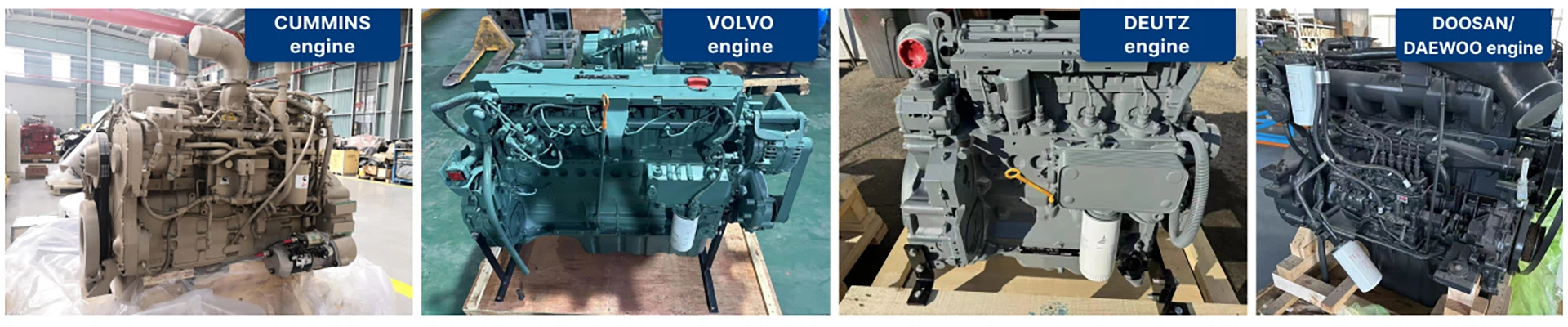
Marine engines, as the "heart" of ships, provide indispensable power for the navigation of ships. Common ship engines are mainly divided into the following categories:
Diesel engine: Diesel engines are the main force of ship power and are widely used in various types of ships. Its working principle is based on the combustion of diesel in the cylinder, which converts chemical energy into mechanical energy. According to the speed, it can be divided into low-speed (speed less than 300 rpm), medium-speed (300-1000 rpm) and high-speed (above 1000 rpm) diesel engines.
Low-speed diesel engines: Most of them are two-stroke, with large cylinder diameter and long stroke, and directly drive propellers. Large merchant ships, tankers, etc. often use low-speed diesel engines because they can adapt to the low-speed rotation of large-diameter propellers to achieve efficient propulsion, and can burn cheap heavy oil to reduce operating costs.
Medium-speed diesel engines: Generally four-stroke, often used in ships such as car and passenger ferries that have restrictions on engine height. Medium-speed diesel engines need to be equipped with reduction gears to match the speed of the propeller to ensure propulsion efficiency. Heavy diesel can also be used.
High-speed diesel engines: more common in high-speed ships and small yachts, with the advantages of small size and light weight. Some use gasoline as fuel, and there are also models that use heavy diesel.
There are various types of ship engines, each with its own advantages and disadvantages. In practical applications, it is necessary to comprehensively consider factors such as ship purpose, navigation environment, economy, environmental protection requirements, etc., and select a reasonable model to ensure safe and efficient operation of the ship.


