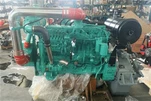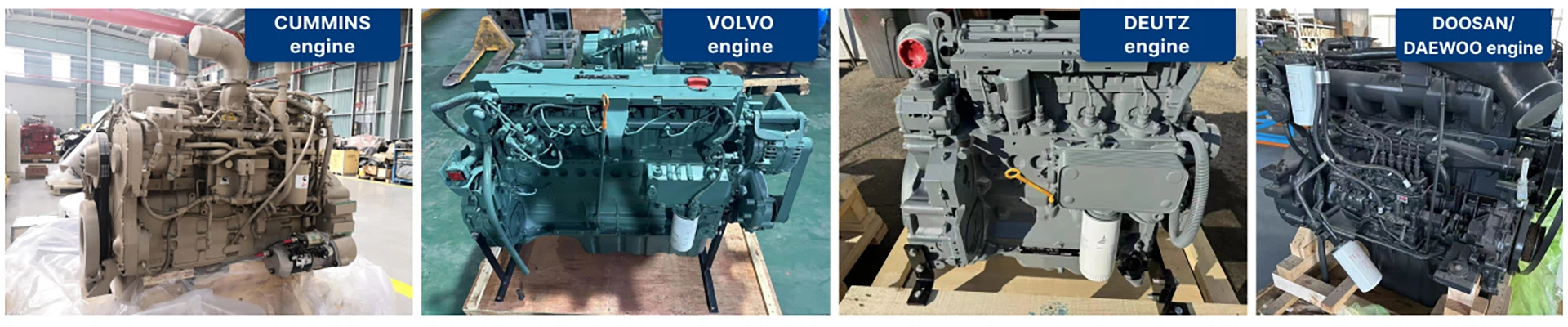
"It's both Cummins engines, but which one should I choose?" This is a frequently asked question in the construction machinery and commercial vehicle markets. The two Cummins models with different valve structures aren't simply a replacement for the old, but rather differentiated technical solutions tailored to different operating scenarios. Their core differences lie in reliability, efficiency, and compliance.
The core technological differences between the two directly impact performance:
Intake efficiency: The 24-valve model's dual intake valve design increases the intake and exhaust flow area by 40%. Combined with the vertical center-mounted injector layout, this improves air utilization by 18% and ensures more complete combustion. The 12-valve model features a larger single valve area. While intake efficiency is slightly lower, it's less likely to clog the airway with impurities like sand and dust.
Control Precision: 24-valve engines are equipped with a VP44 electronic pump or a high-pressure common rail system, achieving injection pressures up to 1800 bar and complying with stringent emission regulations such as China VI. While the mechanical pumps in 12-valve engines offer significant retrofit potential (supporting outputs up to 1,000 horsepower), they lack flexibility in emission control.
Structural Complexity: 12-valve engines utilize a bottom-mounted camshaft and pushrod design, resulting in 30% fewer parts than 24-valve engines and fewer potential failure points. 24-valve engines typically utilize dual overhead camshafts, which reduce mechanical noise by 5-8dB but require higher maintenance skills.
Scenario Comparison: Which engine best suits your operational needs?
12-Valve Engine: The "Reliability Champion" in Harsh Environments
In applications such as mining and agricultural machinery, the 12-valve engine offers irreplaceable advantages:
Durability: The mechanical pump has no electronic components, and its failure rate is 60% lower than that of the 24-valve engine in temperatures as low as -30°C or in environments with a dust concentration of 0.8mg/m³.
Maintenance Cost: The unit price of the valve assembly is only one-third of that of the 24-valve engine. Repairs require no specialized diagnostic equipment and can be performed at any township repair center.
Fuel Compatibility: Highly tolerant to low-quality diesel fuel, it maintains stable operation in remote areas without high-quality fuel.
24-valve Engine: A "Performance Pioneer" with Efficiency and Compliance
24-valve engines are preferred in logistics, transportation, urban infrastructure, and other applications.
Energy-saving Advantages: The 24-valve ISM11 engine in the Shaanxi Automobile Delong X3000 heavy-duty truck offers 3% fuel savings over a 12-valve engine of the same power, saving 6,000 liters of fuel over 200,000 kilometers per year.
Emission Compliance: Optimized combustion reduces NOx generation, lowering aftertreatment system load by 20%, and reducing urea consumption by 3% under China VI emission standards.
Power Response: Torque output at low speeds (1100 rpm) is 25% higher than that of a 12-valve engine, enabling easier starting under heavy loads.
Industry data shows that in the current construction machinery market, 12-valve engines still account for 35% of the replacement market for older equipment, while 24-valve engines account for over 70% of new equipment purchases. With the upgrading of emission regulations and the growing demand for efficient operations, 24-valve models are becoming the mainstream in the market, but the irreplaceable nature of 12-valve models in specific scenarios will continue to exist for a long time.