

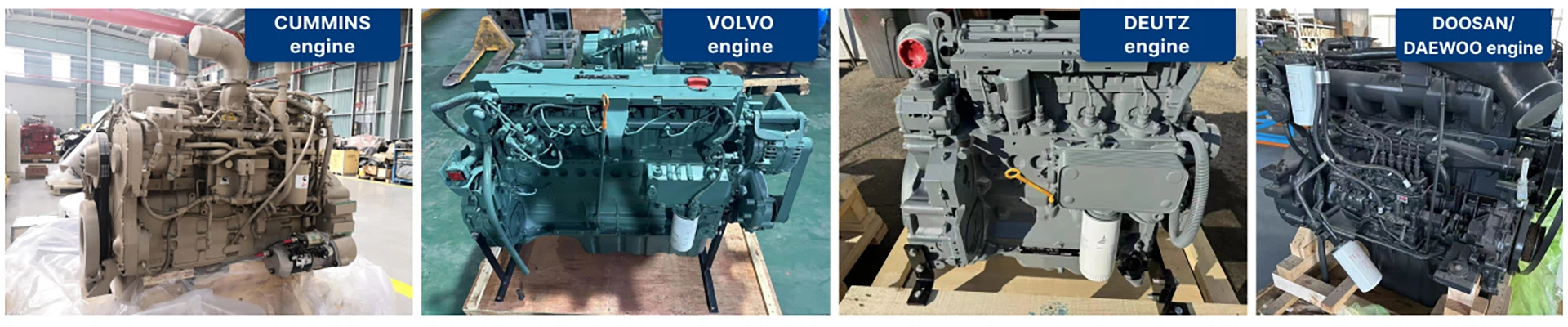
The "heart" technology that drives the world
In modern industrial and transportation systems, the engine is hailed as the "heart of power." Whether it's automobiles, trucks, construction machinery, ships, or power generation equipment, the engine is the core power source. With the global energy structure transformation and the tightening of environmental standards, the engine industry is ushering in a new round of technological innovation and industrial upgrading.
An engine is a power unit that converts chemical energy (fuel) into mechanical energy.
The internal combustion engine is currently the most widely used type. It generates high-temperature, high-pressure gas by burning fuel (such as diesel, gasoline, or natural gas), which drives the piston to do work, thereby rotating the crankshaft and outputting power.
Diesel engines, in particular, are widely used in heavy-duty vehicles, construction machinery, ships, and power generation equipment due to their high compression ratio, high thermal efficiency, and strong torque.
Main Components of a Diesel Engine
Cylinder Block and Cylinder Head – The engine's "skeleton," bearing combustion pressure and maintaining the relative positions of all components.
Crankshaft and Connecting Rod Mechanism – Converts the linear motion generated by combustion into rotational motion.
Valve Train – Controls the timing of intake and exhaust.
Fuel System – Precisely supplies fuel to the combustion chamber, including the fuel injection pump, injectors, and fuel filter system.
Cooling and Lubrication System – Ensures the reliability of the engine during long-term high-load operation.
Industry Technology Development Trends
Electrification and Intelligentization
Energy Saving and Environmental Protection
Hybrid Power and New Energy Layout
Lightweighting and High Efficiency


