

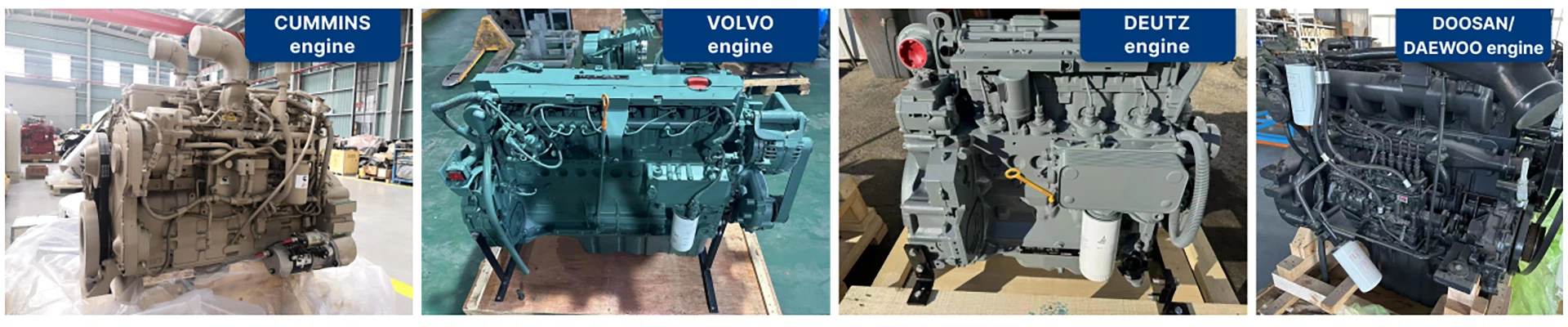
When looking at an engine's specifications, what you really need to focus on isn't the isolated numbers "displacement" or "horsepower," but rather the following combined indicators:
Rated Power vs. Maximum Torque: Power determines how fast it can go, while torque determines how much it can pull. Construction machinery prioritizes high torque at low speeds because it needs "force" rather than "speed" when starting and climbing hills.
Fuel Consumption Rate (g/kWh): This is a core indicator of fuel economy; the lower the value, the more fuel-efficient. Modern high-pressure common rail diesel engines can achieve 195~210 g/kWh.
Specific Power (kW/L): With the same displacement, higher output power indicates more advanced technology (but often sacrifices some durability).
Emission Standards: Currently, the mainstream global standards are China's China VI, Europe's Euro VI, and the US Tier 4. This is a strict requirement for export; you must confirm the regulatory requirements of the target market in advance.
If you are involved in engine import/export trade or equipment supply, the following three points deserve your close attention:
**Original Parts vs. Branded Parts vs. Aftermarket Parts:** For core engine components (injectors, plungers, turbochargers), it is recommended to prioritize original equipment manufacturer (OEM) or top-tier brand parts. While aftermarket parts are cheaper, they are highly susceptible to injection deviations in high-pressure common rail systems, leading to serious malfunctions such as cylinder scoring or bearing failure, with repair costs far exceeding the savings on parts.
**Certifications and Compliance:** When exporting to different countries and regions, it is necessary to confirm in advance whether the products have certifications such as CCS (China Classification Society), ABS (American Bureau of Shipping), and DNV (Det Norske Veritas). This is a mandatory inspection item during customs clearance at many ports.
**Spare Parts Supply Cycle:** Engines are long-life equipment. When purchasing, it is essential to confirm whether the supplier can provide a spare parts supply commitment of at least 10 years. There is an unwritten rule in the industry: after an engine is discontinued, the supply of OEM spare parts usually continues for another 15-20 years, but the supply price will increase year by year.


