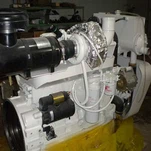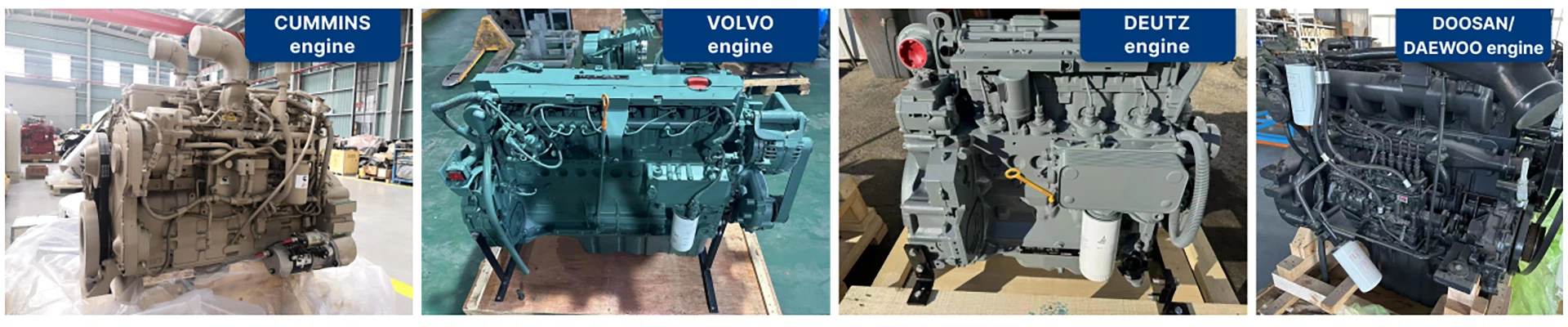
Altitude significantly impacts engine performance, and this effect is direct and unavoidable. As altitude increases, air density decreases and oxygen levels drop, causing a series of "altitude sickness" symptoms in engines. The specific manifestations and severity depend on the engine type and technological level.
Naturally aspirated engines: Most significantly affected. These engines rely on the negative pressure created by the piston's downward movement to draw in air, making them most sensitive to atmospheric density.
Power reduction: For every 1000 meters increase in altitude, atmospheric pressure decreases by approximately 12%, typically resulting in an 8%-15% decrease in engine power. At an altitude of 4000 meters, power output may be only 60%-70% of that at sea level.
Increased fuel consumption and poor combustion: Leaner intake air leads to a richer air-fuel mixture, resulting in incomplete combustion, increased fuel consumption, and increased carbon buildup, potentially even causing knocking.
Difficult starting: In the low-temperature, low-pressure environment of high altitudes, battery performance deteriorates, and the reduced intake air volume during cold starts makes starting more difficult.
Sharply reduced climb performance: This is most directly observed in aircraft. As flight altitude increases from sea level to 8,000 meters, piston engine power can drop by more than 50%, resulting in slower flight and difficulty climbing.
Turbocharged Engines: A Powerful Tool for High Altitudes
Turbochargers compress thin air, forcibly increasing air intake with significant effects.
Minor Power Loss: Below 5,000 meters, turbocharged engines can maintain their nominal power at low altitudes by adjusting turbine speed, without a noticeable lack of power.
Limits Still Exist: Above 8,000-10,000 meters (in aviation), the air becomes too thin, and the turbocharger cannot maintain sufficient power, causing a power drop.
Jet Engines: High Altitude is Their Prime
Turbojet and turbofan engines react very differently to altitude; they are actually less efficient at sea level takeoff.
High Altitude Efficiency: At cruising altitudes around 11,000 meters, the low air temperature (approximately -56°C) helps improve engine compression efficiency, allowing it to operate at its optimal state. Therefore, commercial airliners prefer to fly at this altitude to save fuel.
Slight thrust loss: Although efficiency is high, absolute thrust decreases as air density decreases. At 10,000 meters, turbofan engine thrust may only be 20%-30% of that at sea level. However, the aircraft's drag is also lower at this altitude, allowing it to still cruise at high speeds.
The main risk is "surge": For jet engines, the real threat at high altitudes is not insufficient power, but rather insufficient air intake leading to compressor stall (surge). However, this is an operational boundary issue, and modern engine flight control systems strictly avoid this situation.