

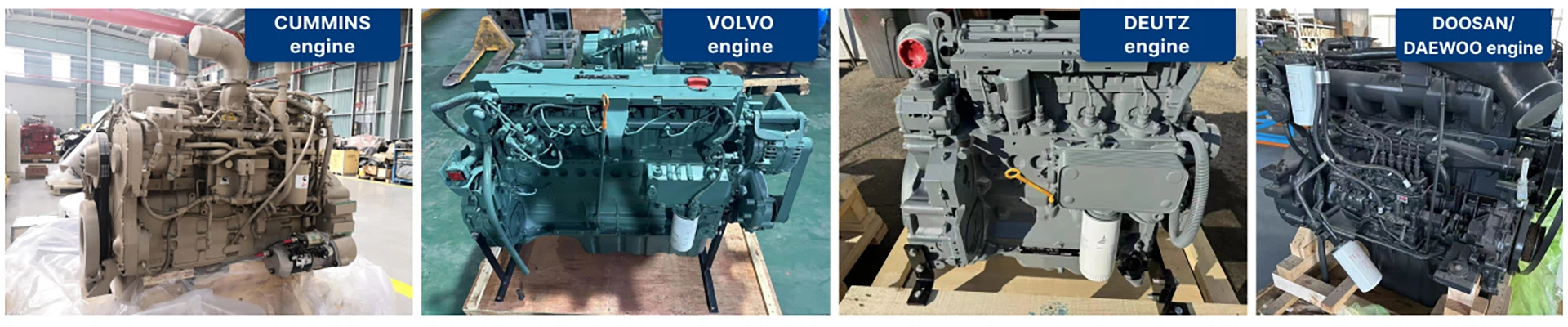

A generator set is a device that converts other forms of energy (such as mechanical energy, chemical energy, etc.) into electrical energy. Its core working principle is based on the law of electromagnetic induction, that is, "when a part of the conductor of a closed circuit moves in a magnetic field to cut the magnetic flux lines, an electric current will be generated in the conductor." Regardless of the type, a generator set usually consists of three core parts: Prime mover The power device that provides mechanical energy is the "power source" of the generator set. Common types include: Internal combustion engine (diesel, gasoline engine, suitable for small and medium-sized units); Steam turbine (burning coal, natural gas, biomass, etc. to heat steam drive, suitable for large power stations); Water turbine (using water flow potential energy, suitable for hydropower stations); Gas turbine (burning natural gas, biogas, etc., suitable for medium-sized units). Generator The core device that converts the mechanical energy provided by the prime mover into electrical energy is mainly composed of a stator (fixed part, including coil windings) and a rotor (rotating part, including a magnetic field). Control system
Auxiliary systems to ensure stable operation of the unit, including:
Start/stop device (such as key switch, automatic start module);
Speed regulator (stabilizes the speed of the prime mover and ensures the stability of the output voltage and frequency);
Voltage regulator (controls the stability of the output voltage);
Protection device (overvoltage, overcurrent, overload protection, etc.).


